
Group Income Protection for SMEs: Support your employees through life’s challenges
Let us help you find the most suitable Group Income Protection insurance policy to replace a portion of an employee’s salary if illness or injury prevents them from working. Get a practical safety net for your team in a difficult time.
· We obtain quotes from the UK’s leading health insurers.
· Transparent policies with no hidden surprises.
· Speak to friendly, UK-based, expert insurance advisers.
Call us at 02038896288
Give your employees peace of mind with Group Income Protection Insurance
What is Group Income Protection Insurance?
Group income protection provides a regular taxable income for employees who are unable to work because of long-term illness or injury. It’s a valuable employee benefit that provides financial support that helps staff meet everyday costs — such as mortgage payments, bills and essential living expenses — while they recover.
What does Group Life Insurance cover?
A typical group income protection policy for SMEs may include:
✓ Salary replacement: usually a percentage of salary (commonly 50%–70%) while an employee is unable to work.
✓ Deferred period: a waiting period before payments start (for example, 8, 13, 26 or 52 weeks). Employers can choose the deferred period to manage costs and coordinate with statutory/company sick pay.
✓ Benefit duration: payments can continue until the employee returns to work, reaches a specific age (e.g. State pension age), or for a fixed period (e.g., 2,3 or 5 years), depending on the scheme chosen.
✓ Rehabilitation and return-to-work support: many policies include access to practical support services like occupational rehabilitation and vocational support to help employees get back to work sooner.
✓ Indexation or review options: benefit amounts may be linked to inflation or reviewed periodically to protect real income value.
Optional extras: enhancements such as cover for pension contributions, national insurance contributions, phased return benefits, or serious illness additions (if required). As with all insurance policies, terms and conditions apply.
Why offer Group Income Protection?
- Financial security: helps staff stay financially stable during extended periods off work, strengthening loyalty and morale.
- Simple cover: group cover is usually easier to administer than multiple individual policies and can be arranged to include most eligible employees without individual medical underwriting up to set limits.
- Cost-effective: employer-paid premiums are often tax-deductible as a business expense, helping avoid extra cost. Coverage design (deferred periods and benefit level) lets you balance cost and protection.
- Business continuity: for an SME or business owner it’s reassuring to know there’s a clear plan in place if a key employee is off work, helping protect continuity for your team and your clients.
How to get a Group Income Protection quote
1. Call us at 02038896288 – this is the quickest way to speak to a UK Group Income Protection insurance expert.
2. Complete online form – prefer us to call you? Simply complete the form and we’ll call you.
3. Book a meeting - choose a time that works best for you. Complete the online form, and we’ll email you a link to schedule your meeting.
Get a quote today

Speak to an expert
How Group Income Protection Insurance works
-
Check the cover level
Decide how much of salary you want the policy to replace (e.g., 50%–70%) and whether to include additional coverage such as pension contributions or indexation for claims in payment. This helps set the expected monthly benefit. -
Choose a deferred period
The deferred period determines when payments start after incapacity begins. Longer deferred periods reduce premiums but lengthen employee waiting times before benefits start. We’ll help you find the right point between affordability and support. -
Set up the policy and scheme
Most employees are included automatically and do not need individual medical checks up to agreed underwriting limits. We can also help you align the scheme with your employment contract and company sick pay policy -
Employer pays the premiums
Employers typically pay the premiums as a business expense. Plan design determines tax treatment; we’ll advise on structuring cover to meet your needs and tax considerations. -
Employee claims and support
If an employee becomes unable to work, you notify the insurer and provide required evidence (e.g., GP/Consultant reports). Many schemes include access to case-managed rehabilitation and return-to-work programmes and additional wellbeing services with priority given to early intervention. -
Payments start
If the claim is accepted, the insurer pays a regular benefit to the employer to pay the employee as a replacement salary (monthly). Where rehabilitation is successful, payments may end as the employee returns to work.
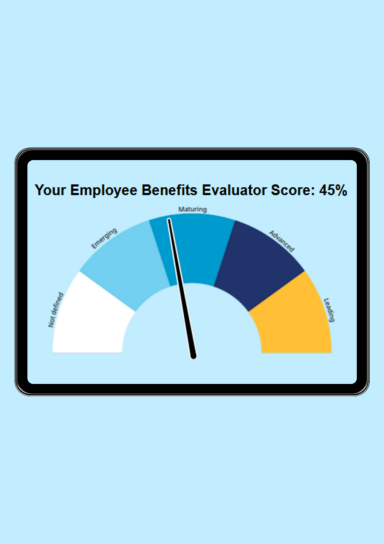
How competitive are your benefits?
What to look out for
Group income protection is an effective benefit, but it’s important to check the details so the cover truly protects employees:
- Deferred period: long deferred periods delay payments; choose a period that balances cost and employee needs.
- Definition of incapacity: some policies pay only if the employee cannot do their own job, while others require inability to do any job — this affects claim outcomes.
- Benefit level and duration: low percentage cover or short maximum benefit durations may be insufficient for long-term illnesses.
- Medical underwriting thresholds: higher earners or late entrants may require individual underwriting which could lead to exclusions.
- Exclusions and limitations: certain occupational exclusions can affect cover as well as maximum benefit caps.
- Tax and payroll treatment: ensure you understand how premiums and payments are taxed.
How we support you
We’ll help you design and place a group income protection policy that suits your business and workforce, and complements your wider benefits package:
- Tailored plan design: salary replacement level, deferred periods and benefit durations aligned to your business needs and budget.
- Implementation and communications: support with onboarding, employee communications and administration set-up.
- Claims support and rehabilitation: we work with insurers that provide active case management and rehabilitation services to help employees return to work.
- Policy reviews: regular reviews to ensure cover remains competitive and appropriate as your workforce changes.
Result: a meaningful employee benefit that helps protect your employee’s incomes — not just a token payment.
Free guide: Employee Benefits Market Trends (UK)
FAQs
Speak to an expert
Please also note that we are not lawyers or tax advisers and nothing in this document should be construed as legal or tax advice or relied on for this purpose. We strongly recommend that you seek appropriate advice in relation to matters of law and taxation.
Mercer Marsh Benefits is a trading name used by Mercer Limited who are authorised and regulated by the Financial Conduct Authority (Firm Reference Number 121935). Mercer Limited is registered in England and Wales (Registration Number 984275). Registered Office: 1 Tower Place West, Tower Place, London, EC3R 5BU. © 2026 Marsh. All rights reserved.