
Why a compelling employee value proposition is the new talent advantage in the age of AI


As organisations accelerate investment in innovative technology like artificial intelligence (AI) and advanced analytics, 2026 is shaping up to be a year defined by implementation. Mercer’s 2026 Global Talent Trends* research shows that 98% of organisations are planning some form of organisational change in order to increase productivity and sustainability. AI is widely seen as the engine powering this shift, with 72% of investors recognising that adopting it is now central to long-term competitiveness.
However, as technology transformation accelerates, uncertainty is growing among business leaders, employees, and HR teams alike.
A climate of workforce uncertainty
Employees are navigating a complex mix of pressures. Concern about the impact of AI on job security is increasing, with the proportion of employees fearing technology-driven job losses rising from 28% in 2024 to 40% today. At the same time, over half (53%) the employees responding to the Global Talent Trends survey report a lack of future-ready skills needed to remain competitive in an AI-enabled economy. This gap can affect their personal growth and career development. Employees are also managing pressures related to maintaining work life balance amid these changes.
Combined with increasing economic pressures as a consequence of the Middle East conflict, these factors are influencing how people feel about their employment experience. One of the most striking findings in Mercer’s 2026 Global Talent Trends report is the sharp decline in the proportion of employees who say they are thriving at work. This has dropped from 66% in 2024 to just 44% today, highlighting a widening gap between organisational transformation and employee confidence.
Business leaders face their own form of uncertainty. Eight in ten executives report difficulty balancing short-term performance pressures with longer-term strategic workforce needs. Only around one-third feel confident that their organisation can redesign work and acquire the skills required to capture the full value of AI. At the same time, while 72% of executives identify people-risk assessment as a top priority, only 27% believe HR currently advises them effectively on those risks, signalling a significant opportunity for HR to strengthen its strategic impact.
EVP and employee experience move to the top of the agenda
Against this backdrop, one priority stands out clearly. Improving employee experience and building a strong Employee Value Proposition (EVP) ranks as the number one people priority for HR leaders in 2026, based on Global Talent Trends* responses.
Organisations are redesigning work, introducing new technologies, and competing for scarce transformation skills and top talent. So the ‘deal’ between employee and organisation becomes a central driver of attraction, employee engagement, and retention.
Organisations that fail to align the promise of their EVP with the day-to-day employee experience, risk losing critical talent at precisely the moment they need it most. And that may be the most obvious outcome: many more employees may feel deeply uncertain by the change AI ushers into the workplace. The key leadership question therefore goes beyond how to implement AI. Rather, it becomes: how effective is the human and AI interface at work? Is it creating clarity and engagement for our employees?
Two practical pathways emerging
-
HR leaders are using AI-enabled tools to analyse publicly available employee and candidate sentiment at scale.By scanning commentary across employer review platforms, professional networks, and candidate feedback channels, organisations can build an evidence-based picture of how their EVP is perceived externally and how it compares with competitors. Mercer’s Reputation Scan capability, for example, analyses insights from more than 100 public sources and benchmarks organisations against sector peers, providing a rapid and objective view of EVP competitiveness.
-
Organisations are measuring employee experience in more agile and outcome-linked ways.Advances in survey technology and AI-enabled analytics are reducing the complexity of listening to employees while making it easier to connect experience insights to business outcomes. More targeted listening strategies, focused on key moments-that-matter and critical EVP elements, are enabling leaders to prioritise interventions that deliver measurable workforce and performance impact.
Using AI to resolve the uncertainty AI Is creating
2026 will likely be remembered as a defining year for AI implementation. The most successful organisations will use AI not only to boost productivity through automation but also to:
- Strengthen workforce confidence;
- Keep their EVP competitive;
- Ensure the human experience of work remains clear, compelling, and real.
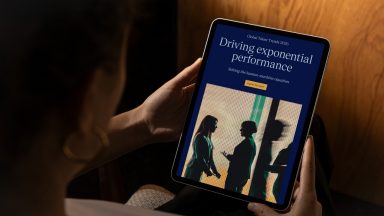
Global Talent Trends 2026
- Market Lead Consultant, Mercer
- Senior Consultant, Mercer