Strategic Workforce Planning: Elevating HR’s Business Value


HR struggles to prove its strategic value to the business – but Strategic Workforce Planning could be the answer
Many who work in HR will tell you they are the unsung heroes, supporting the business through volatility and transformation, and ultimately powering the main resource behind almost every industry: the people. But with the growing presence of generative artificial intelligence (AI) causing significant restructuring and redesign, it’s easy to assume this means HR will become less important, when in fact the opposite is true. Organisations may decide redundancies are the answer, or they may aim for higher productivity, but either way, few would argue that we’ll end up with businesses run entirely by AI agents or the future equivalent. The people who remain will be your superstars, and efficiencies made in the way they work will be your cutting edge.
So, what does this mean for HR? Well, Strategic Workforce Planning (SWP) should be on every HR function’s 2026 agenda – focused ultimately on designing the workforce your company needs in the future, not just today. Our 2026 Global Talent Trends report indicates that only 50% of executives believe they’re currently investing enough to close the skills gaps they will face tomorrow. This presents an opportunity for HR to act as a true strategic partner, demonstrating its value through targeted workforce interventions that enable growth, resilience, and long-term performance.
In short? HR’s role this year is simple: make sure we have the right people, in the right place, at the right time, with the right skills for now and in the future.
Too frequently, however, HR transformations are compelled to focus on short-term cuts or cost-management strategies. But these often sacrifice both immediate business priorities and long-term objectives and business needs. This only reinforces the perception of HR as a service function, even though HR itself aspires to be, and perhaps already sees itself as, more of a strategic partner. So, what if your HR team invests in building SWP capability and starts having the conversations that enable your leaders to bring their ambitious business goals and workforce strategies to life? Ultimately, HR reinforces its strategic value and its importance to making things happen - and then? That value puts HR in a much better position to be able to unlock the investment needed to transform more widely. This might include:
- Redesigning talent management practices
- Building enhanced people and organisation data systems
- Leading skills-powered transformations
- Investing in continuous improvement exercises.
HR knows the value it delivers to the business, but communicating that value can be difficult
When HR transformation focuses primarily on efficiency, experience, or capability maturity, value becomes implicit rather than explicit. The organisation is expected to feel the benefits, rather than see them. In our work with clients, we find similar themes coming through. Many organisations report that their HR transformations are targeting:
- Reforming or reinvigorating their HR Technology.
- Data accuracy and storytelling with a data-driven approach.
- More consistent and more efficient processes.
- Improved employee experience.
These address many of the workforce challenges HR are facing, but are sometimes not aligned with the challenges business leaders are actually grappling with:
- Can we deliver our strategy with the workforce we have?
- What trade-offs are we making about talent, cost, and capacity in a tight labour market?
- How do we get the right blend of human & automation / AI to remain competitive?
According to our 2026 Global Talent Trends report, 63% of executives (which rises to 70% in the UK) believe redesigning work to incorporate AI and automation will deliver the greatest return on investment in 2026. However, less than half of HR leaders (fewer than one-third in the UK) are prioritising improving their workforce planning process on this year’s agenda.
So, what’s potentially pushing this gap? One common mistake is focusing on HR activity over outcome. Most HR metrics track what HR does - time to hire, completion rates, engagement scores - but few track whether the organisation is making better workforce decisions as a result. This is then compounded by the fact that HR transformations are typically aligned to strategy only in principle and are often justified through qualitative benefits or indirect cost savings. For HR, this might seem compelling on the surface but really, it’s reinforcing that disconnect from the business — sitting one step removed from strategy, rarely translating into clear workforce implications, and struggling to prove the value through quantitative return on investment.
SWP: an opportunity to boost HR’s functional integrity
So, we know there’s a gap between HR’s outcome and the business’ expectations. However, our work with clients has shown that this is rarely a question of HR ambition, but more a recognition that HR needs a stronger mechanism to anchor its work in the way the business recognises value.
That’s where SWP could really make a difference. At its core, it answers a series of simple questions:
- What roles and skills exist in my workforce today?
- What roles and skills do I need in to fulfil my strategic ambitions, both now and in the future?
- Where are the gaps — in terms of workforce capabilities, skills, scale, proficiency, location and cost?
- How do we close the gaps most efficiently and effectively?
The real distinction though is that at its core, SWP is inherently decision-oriented. It forces organisations to confront trade-offs that are often overlooked or loosely implied — like hire, reskill, or automate? Or be proactive and invest now, or stay reactive and accept the risk later?
However, these are not HR questions - they’re business questions, with workforce consequences. And there-in lies the link… the lever that opens the door for strategic conversations and makes HR critical to business success.
But if that’s not compelling enough on its own, then the picture for HR extends far beyond this business value debate too. Each time we support a client in embarking on their SWP journey, the story that resonates most is that SWP truly is an enabler of outcomes across the full employee lifecycle. From talent attraction through upskilling and reskilling, to performance management and internal mobility. And all of this while supporting broader people initiatives, such as workforce diversity objectives, and adapting to demographic shifts. This means that upon completion of an SWP cycle, the end-to-end workforce plan you develop really does become one and the same as your existing people plan.
What is the differentiator?
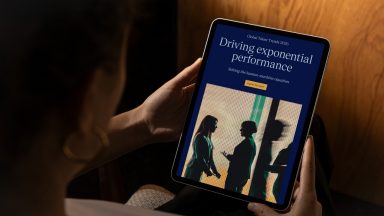
Global Talent Trends 2026
- UK SWP Lead | Workforce Transformation
- UK HR Transformation Lead | Workforce Transformation