Unlocking the power of benefits data and AI


The new year has begun; you’ve closed the book on 2025 and are ready to push forward with your 2027 benefits strategy. But slow down — by opening that book back up and taking a look backwards, you may gain information that’s imperative to achieving your strategic goals. Exploring benefits administration data — with the help of artificial intelligence — can yield important insights into employee needs, predict behaviors, personalize benefits offerings, and optimize costs.
The strategic value of benefits data
Benefits administration systems are more than just tools for managing eligibility and claims; they are treasure troves of valuable information. While benefits data has long been used to make broad-brush predictions based on large populations, historically, benefits administration reports have been hard to generate and cumbersome to use. AI not only allows employers to access much more data, but more intuitive reporting makes it far easier to work with.
Enrollment patterns, claims data, utilization rates and demographic details provide a comprehensive picture of employee preferences and behaviors. When analyzed effectively, this data can inform strategic decisions that enhance employee experience and operational efficiency and point the way to cost savings. For example, if data indicates a rising interest in mental health resources, employers can expand relevant offerings, demonstrating responsiveness and care. Similarly, AI can reveal which benefits are underutilized and not providing value, helping employers optimize investments by negotiating better rates, eliminating redundant coverage, or streamlining plan options
Furthermore, automating routine tasks through AI — such as eligibility verification, claims processing, and reporting — reduces administrative burdens and minimizes errors. This not only improves efficiency but also frees HR teams to focus on strategic initiatives like employee engagement and benefits design.
Predicting employee behavior and needs
One of AI’s most powerful applications is its ability to forecast employee needs. The employee benefits lifecycle is not a new concept but understanding it remains crucial. Employees’ needs evolve over time, from first job benefits to retirement planning. For example, younger employees may focus on student debt and early career development, while those in their 50s and 60s are more concerned with healthcare and retirement options.
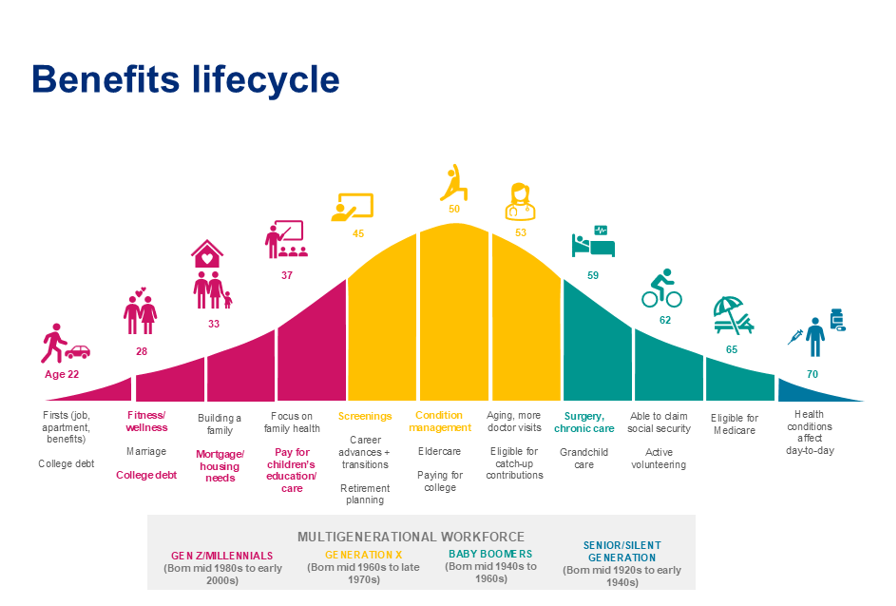
Data from benefits enrollment and usage patterns can reveal these shifts allowing organizations to tailor their benefits packages, ensuring relevance and increasing engagement. By analyzing benefits utilization data, employers can predict when employees might need additional support, such as eldercare resources or chronic condition management. Today, AI-powered tools — especially when paired with administration systems that gather claims data — are able to pinpoint member communications to create a truly individualized platform of health care options. With targeted nudges, a member with diabetes is encouraged to refill their Metformin prescription; a Gen Zer to get their annual physical; new parents to make all of their pre-natal visits. AI can be used to help individuals at any point on the care spectrum, whether they need preventive care, acute medical treatment, on-going disease risk mitigation or palliative care.
Employer considerations
Many employers are not yet leveraging AI in their total rewards processes. This gap presents a significant opportunity to harness AI’s potential to improve decision-making and employee experience. To maximize the power of your benefits data, consider the following:
- Ensure data readiness: Build a solid foundation with accurate, comprehensive data on employee demographics, eligibility, job functions, and pay. High-quality data is essential for reliable AI insights.
- Enhance efficiency: Automation and AI solutions to streamline administration and improve the employee experience. For example, the administration system can “learn” from how an employee has answered decision-support questions and prefill responses when they going back into the system to review or make changes.
- Understand what you’re paying for: Leverage data science to analyze your benefits spend and utilization. This helps optimize costs while ensuring employees receive meaningful support.
- Leverage analytics for decision-making: Use AI-powered analytics to generate detailed information on utilization and cost that reveal how your benefits are performing. Are current programs aligned with your benefits philosophy? Are they meeting employee needs?
- Embrace AI-powered interventions: From virtual human chatbots to scenario planning, AI can help you deliver a more personalized, responsive benefits experience.
- Focus on employee-centric benefits design: Use insights to tailor benefits offerings that align with employee preferences and life stages. Regularly review utilization data and feedback to refine programs.
- Personalize and communicate: Use insights to tailor benefits offerings and communicate their value effectively. Personalized benefits increase engagement and retention.
- Stay ahead of trends: Keep abreast of global trends in total rewards, such as personalization, optimization, and simplification, to ensure your strategies remain competitive.
The future of benefits management is data-driven and AI-enabled. Organizations that embrace AI will be better positioned to predict employee needs, personalize rewards, and operate more efficiently. This approach not only enhances employee satisfaction and retention but also drives cost savings through smarter resource allocation and process automation. Your journey begins with data readiness and a willingness to innovate.