
Navigating the fog: Charting your 2026 compensation planning strategy



After several years of unprecedented volatility, a semblance of stability is returning to the world of compensation.
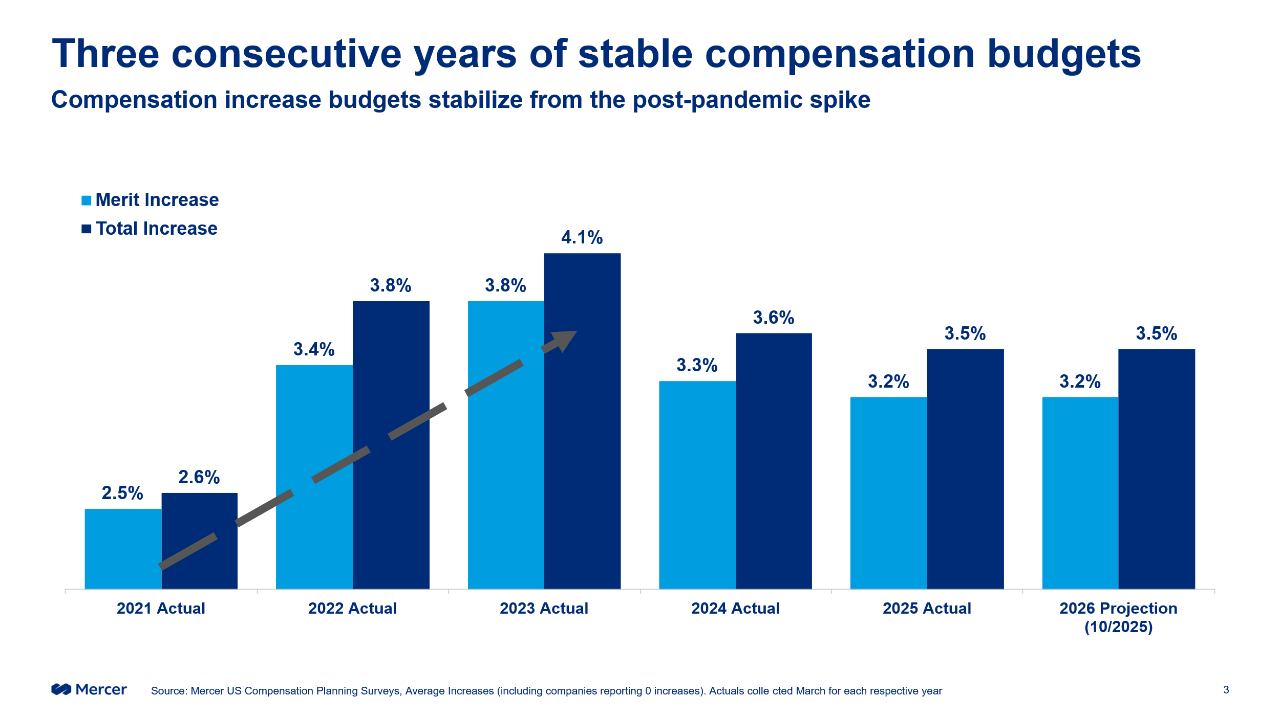
The post-pandemic surge of double-digit salary increases and rapid market adjustments has largely subsided. While the broader economic environment remains uncertain, compensation budgets are settling closer to historical norms. For 2026, employers project an average merit increase budget of 3.2% and a total salary increase budget of 3.5%. This marks the third consecutive year of relative stability following the sharper upward adjustments seen in 2021–2023.
For total rewards leaders, the “spend-at-all-costs” tactics used previously are no longer viable. The current environment shows organizations adopting a more precise and disciplined approach.
A tale of two labor markets
The most significant challenge for compensation planning in 2026 is the widening divergence in labor market dynamics. We’re no longer in a situation where all jobs are in high demand. Instead, we’re seeing a clear separation between sectors that are heating up and those that are cooling down based on both the supply and demand of the workforce.
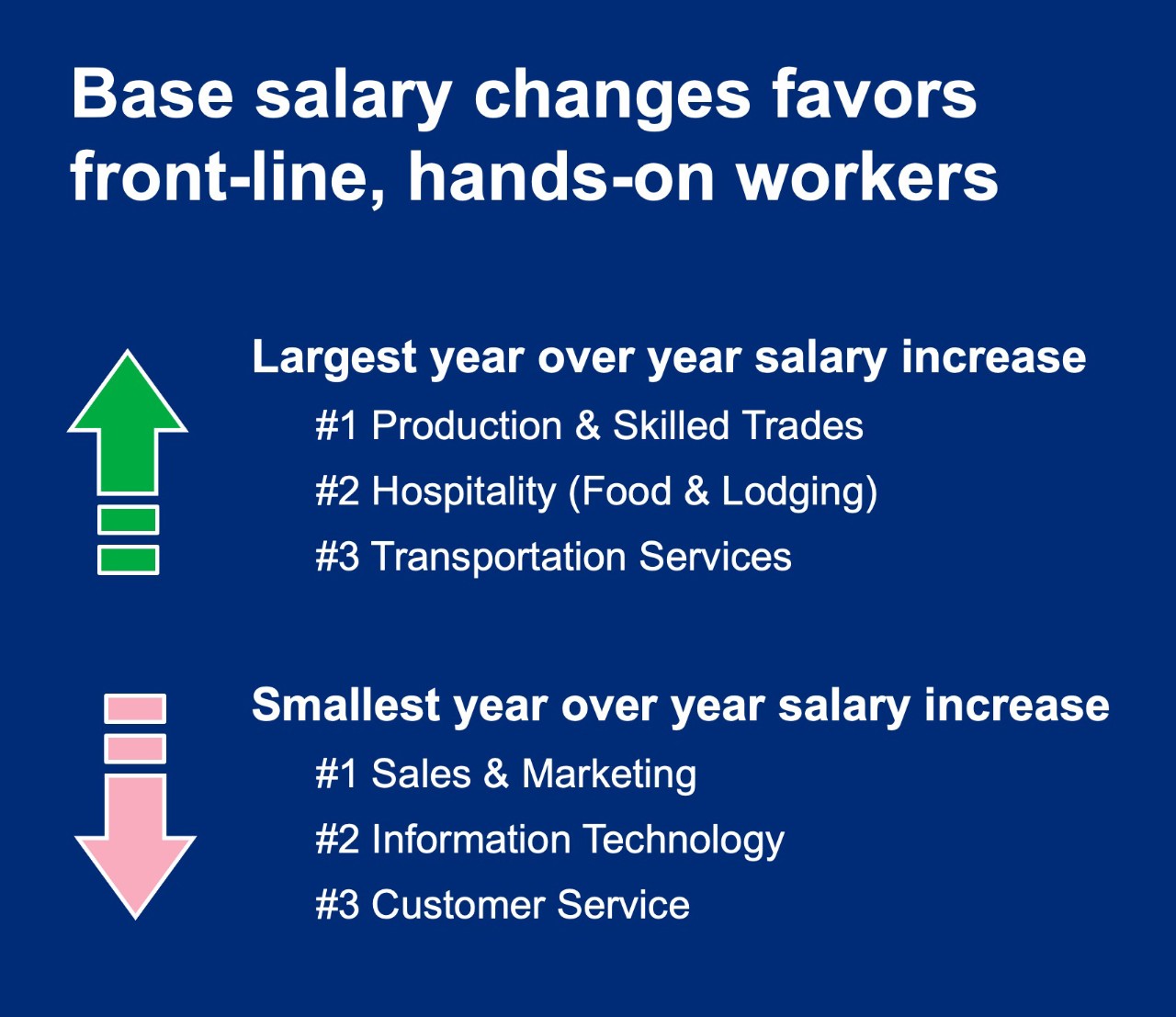
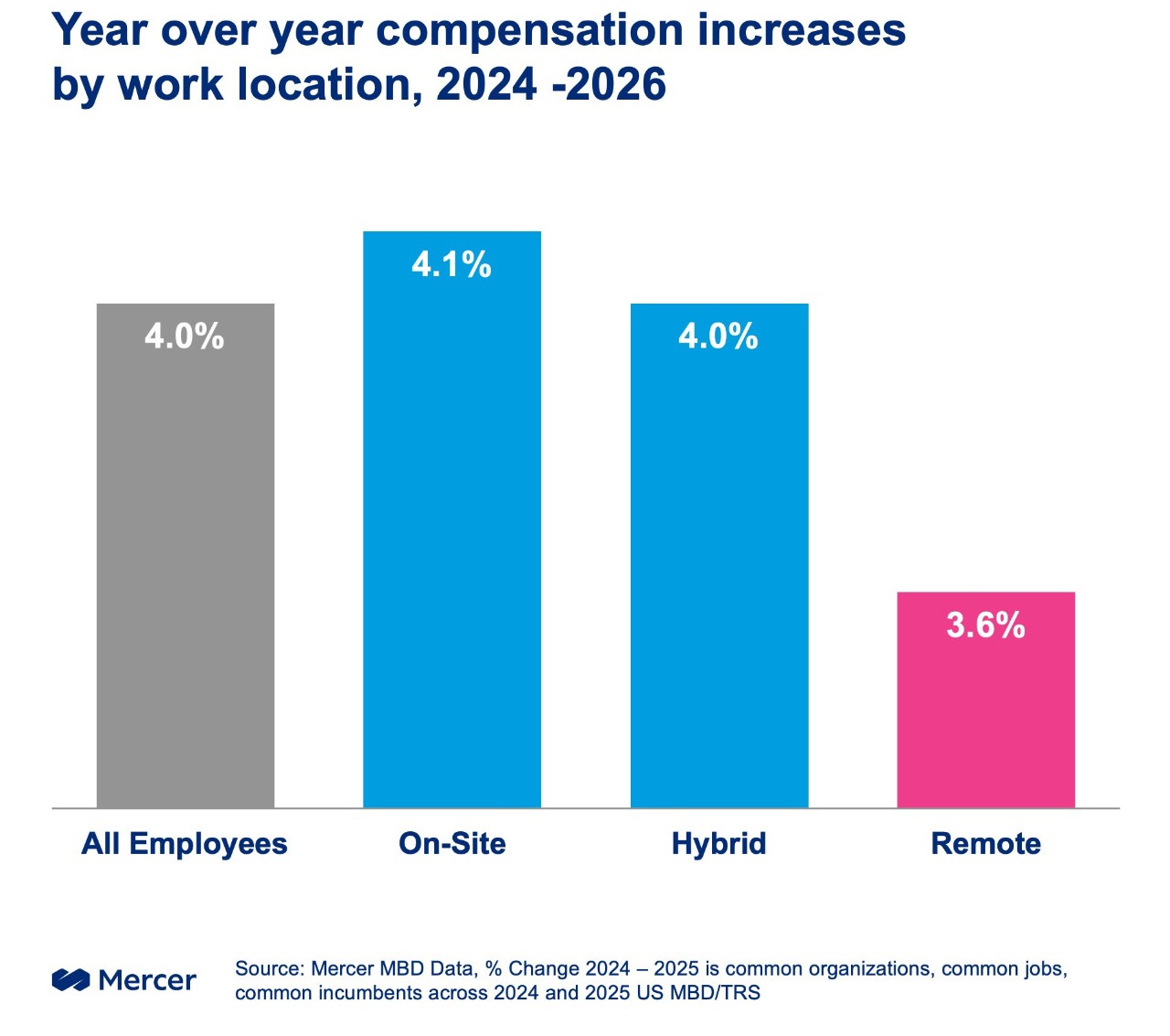
Front-line, on-site, and skilled trade roles continue to see strong wage pressure. Industries such as production and skilled trades, hospitality, and transportation are experiencing persistent talent shortages, driving employers to take a more aggressive stance on pay to attract and retain the workers required to maintain operations and support growth.
In contrast, compensation growth for many white collar job families is moderating. Roles in sales and marketing, customer service, and particularly information technology are among the lowest year-over-year salary increases. The story in technology-related roles is especially nuanced. Rapid advancements in artificial intelligence are reshaping demand by automating certain tasks while creating new, highly specialized positions. While top AI and machine learning talent continues to command significant premiums, broader tech hiring has slowed, especially for entry-level and nonspecialized roles.
Year over year change in compensation by job, 2024-2025

Beyond peanut butter: Optimizing your merit process
So, what should companies do in this complex and uncertain environment? The answer is simple: spend wisely. The days of spreading your merit budget like peanut butter are over. A uniform, across-the-board increase does little to address the nuances of the current labor market. It doesn't close pay gaps, it doesn't reward top performers, and it doesn't address the unique pressures of high-demand sectors.
Instead of a "peanut butter" approach, companies need to adopt a more surgical and data-driven strategy. This starts with optimizing your merit process. For too long, the merit process has been a flawed and frustrating experience for both managers and employees. It's often a time-consuming, administrative exercise that fails to deliver meaningful results. But it doesn't have to be this way.
By leveraging analytics and technology, you can transform your merit process from a flawed system to a fair and effective one. A modern, data-driven approach can provide managers with smart recommendations, guiding them to make compensation decisions that are aligned with your company's goals and values. Imagine a system that flags pay equity risks in real-time, that highlights high-performing employees who are underpaid relative to the market, and that recommends differentiated increases based on individual performance, market data, and internal equity.
This is not about taking the human element out of compensation. It's about empowering managers with the data and insights they need to make better, more informed decisions. It's about ensuring that your compensation budget is not just an expense, but a strategic investment in your most valuable asset: your people.
The road ahead
As we look ahead to 2026, it's clear that the challenges for total rewards leaders are significant. But so are the opportunities. By moving beyond outdated practices and embracing a more strategic, data-driven approach to compensation, you can build a fairer, more equitable, and more effective rewards system.
Most organizations are still in the preliminary phases of their 2026 budget planning. The landscape is still shifting, and new trends will undoubtedly emerge in the coming months. We'll be providing another update in November with the latest data and insights to help you finalize your plans. In the meantime, now is the time to start asking the tough questions, to challenge the status quo, and to lay the groundwork for a smarter, more strategic approach to compensation in 2026 and beyond.