
Build portfolios that withstand volatility with real assets

30 October 2025
Traditional diversification may not be working when investors need it most. Real assets may provide the stability and income generation that volatile equity and bond markets may struggle to deliver consistently.
While real assets may provide stability, current market conditions create both challenges and opportunities that some investors may be struggling to interpret. At Mercer’s recent Private Markets and Alternatives Masterclass, held in collaboration with Portfolio Construction Forum, Global Head of Real Assets Alan Synnott tested the cautious real asset market sentiment influenced by mixed signals. While recent performance in some sectors may have disappointed investors, the drivers of real asset returns appear robust and may create attractive entry points.
Long-term societal megatrends, such as the shift to a more digital and decarbonised world, are shaping real estate and infrastructure investments. These assets now span diverse sectors – from residential and logistics to social and transport – and respond to different trends. For example, a surge in eCommerce can drive demand for data centres while traditional retail assets may struggle.
So what can financial advisers consider when allocating real assets? If the goal is portfolio stability and growth, they could focus on the underlying characteristics and try to understand how both listed and private real assets can play complementary roles.
Key takeaways
Three ways advisers can use real assets to stabilise portfolios:
-
Profit from the valuation disconnect
-
Match real assets to client goals
-
Focus on fundamentals over market noise
Profit from the valuation disconnect
The listed real estate market appears to have created a price versus value divergence. While share prices have fallen, the underlying fundamentals look to tell a different story.
Justin Blaess from Quay Global Investors says “this is an opportunity for investors. Listed global real estate has significantly underperformed despite improving fundamentals. Meanwhile, inflation is putting upward pressure on construction costs. For example, construction costs for American Homes for Rent, a real estate investment trust and one of the largest landlords of single-family homes in the US, have increased by 59% since 2019. Combined with higher interest rates supply is decreasing rapidly which is positive for existing landlords”.
The resulting supply crunch is reshaping rental markets. Fewer new projects mean existing properties capture the growing demand. This translates into rental growth and stronger pricing power for established landlords. Yet share prices for real estate investment trusts (REITs) have moved in the opposite direction, creating a underpriced assets for investors to target.
“Over the last four years, American Homes for Rent’s earnings per share grew by 38% while its share price fell by 20%. We’re seeing a similar trend across other real estate sectors such as student accommodation and storage in the UK and Europe,” says Blaess.
"We think now is the time to revisit buying global real estate” he adds. These companies generate returns through owing and renting properties in essential sectors such as housing where demand is resilient during market and economic volatility.”
Match real assets to client goals

The underlying real assets in infrastructure can provide essential services for society. And these have evolved over the decades, with new assets including EV charging and wind turbine installation.
“Many of these real asset categories are not your “get rich quick” money, but they can offer long-term income potential,” says Synnott. He suggests both listed and private real assets have a role to play within a portfolio. Three ways financial advisers can consider packaging them into strategies for clients:
-
Playing transformative trends; by investing in energy transition, green mobility, urban solutions and data infrastructure.
-
Investing in the mid-cap market segment; with value creation opportunity and exit options.
-
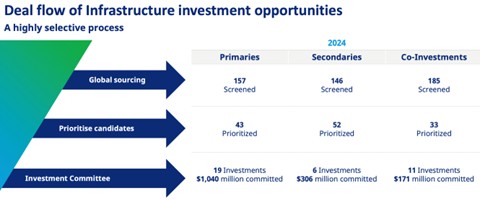
Weighing up the potential growing opportunity set in co-investments and secondaries. Co-investments allow investors to invest directly alongside fund managers in specific assets. Secondaries involve purchasing existing fund positions from other investors, often at discounts and with faster return timelines.
Focus on fundamentals over market noise
While there are ample opportunities to invest in real assets, financial advisers may like to watch out for a few red flags. Mercer’s due diligence focuses on investment manager sector experience, alignment in investment manager strategies and governance. If real assets are unlisted, we conduct a deeper dive into the underlying assets and company operational excellence.
“In the private real estate space, you're focusing more on individual assets rather than businesses. You’re looking at the cashflow from specific assets or properties,” Synnott explains. “That bottom-up asset selection is incredibly important.”
Listed REITs also require a thorough, although less rigorous, due diligence approach. Blaess and his team focus on three themes: the real estate, the balance sheet and the management.
"You're investing in an operating business, so you need to ensure the REIT investment manager has a coherent strategy for generating return on equity," he adds.
The due diligence burden is higher with real assets, but so is the potential for finding quality assets at attractive valuations. For financial advisers willing to dig deeper, the current environment may offer compelling opportunities.
A partner with expert market insight
Real assets can offer a pathway to portfolio resilience that traditional equity and bond allocations may struggle to match consistently. Financial advisers who can navigate real asset markets are likely to have an advantage in the current market, where their clients seek diversification, capital preservation and income generation.
With a comprehensive view of global pricing and relative value across the entire real assets universe, and approximately 3,000 professionals working to improve investment outcomes for participants both in Australia and around the world, Mercer’s breadth of coverage can give financial advisers a robust market perspective. We seek to construct diversified portfolios that deliver the stability real assets can provide – with the potential to smooth out volatile equity returns.