
Marsh CFA Institute Global Pension Index 2026


An analysis of 55 pension systems around the world


Strengthening retirement income systems in an ageing world
Ageing populations, shifting workforce dynamics, and heightened geopolitical uncertainty are reshaping the retirement landscape. Now in its 18th edition, the Marsh CFA Institute Global Pension Index provides an established tool for benchmarking and comparing the world's retirement income systems, offering a structured framework to help decision-makers navigate the challenges ahead with greater clarity and confidence.
This year, the index benchmarks 55 pension systems worldwide with the addition of Dominican Republic, Kenya and Qatar – covering 66% of the world’s population – spotlighting both challenges and opportunities for policymakers.
Systems are assessed across three pillars:
-
Adequacy (40%)*
Delivering meaningful retirement incomes today -
Sustainability (35%)*
Remaining resilient for tomorrow -
Integrity (25%)*
Earning the confidence of those who depend on it
Together, they capture the balance every pension system must strike. The report evaluates each system across more than 50 indicators to provide actionable insights.
Each year, the index also features a deep dive into a topical issue. In 2026, the focus is on the impact of ageing populations on pension systems and how policy responses to demographic challenges can help develop sustainable retirement income policies in the long run.
Browse through the report below to discover more about the analysis and each benchmarked retirement income system.
This year’s A-grade retirement income systems

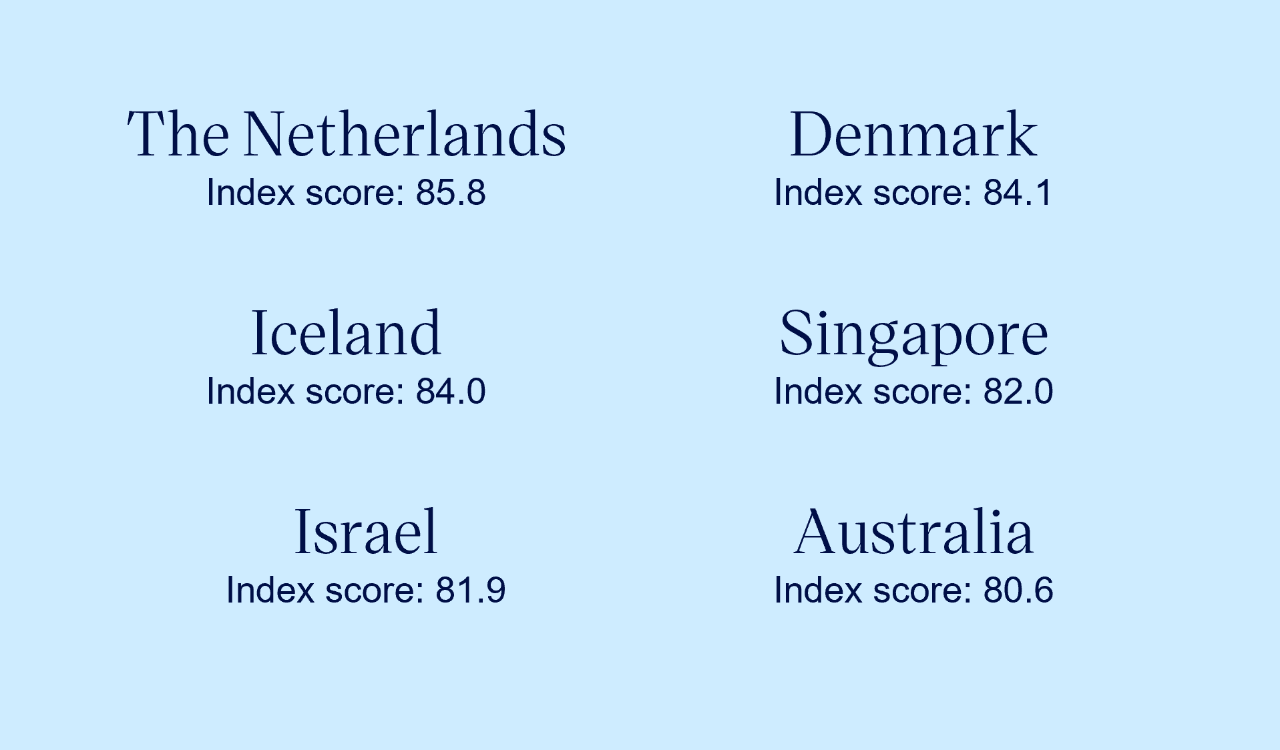 MCGPI A Grades
Top 3 rated systems for each sub-index
-
Adequacy
How much do you get?
1. Kuwait
2. The Netherlands
3. France -
Sustainability
Can the system keep delivering?
1. Denmark
2. Iceland
3. The Netherlands -
Integrity
Can the system be trusted?
1. Finland
2. Norway
3. Singapore
As the longevity economy reshapes retirement expectations across Asia, employers need to take a fresh look at how they support their people for the long term. Employers, employees and governments play complementary but different roles in ensuring that employees’ retirement plans are not only cost-effective and sustainable, but also competitive and fit for purpose. Marsh Investments and Retirement can help employers better understand employee retirement needs, adapt to policy changes, and design solutions that provide stronger protection, while balancing cost, governance, and long-term value for both employers and employees.
Practice Leader, Marsh Investments and Retirement, Hong Kong
People are living longer, work is changing, and the pressures on retirement income systems are growing. The question is no longer whether systems need to evolve, but how quickly and how effectively they can do so.
Lead author, Partner, Marsh, Investments and Retirement
View the full 2026 report
Overall grade for each retirement income system

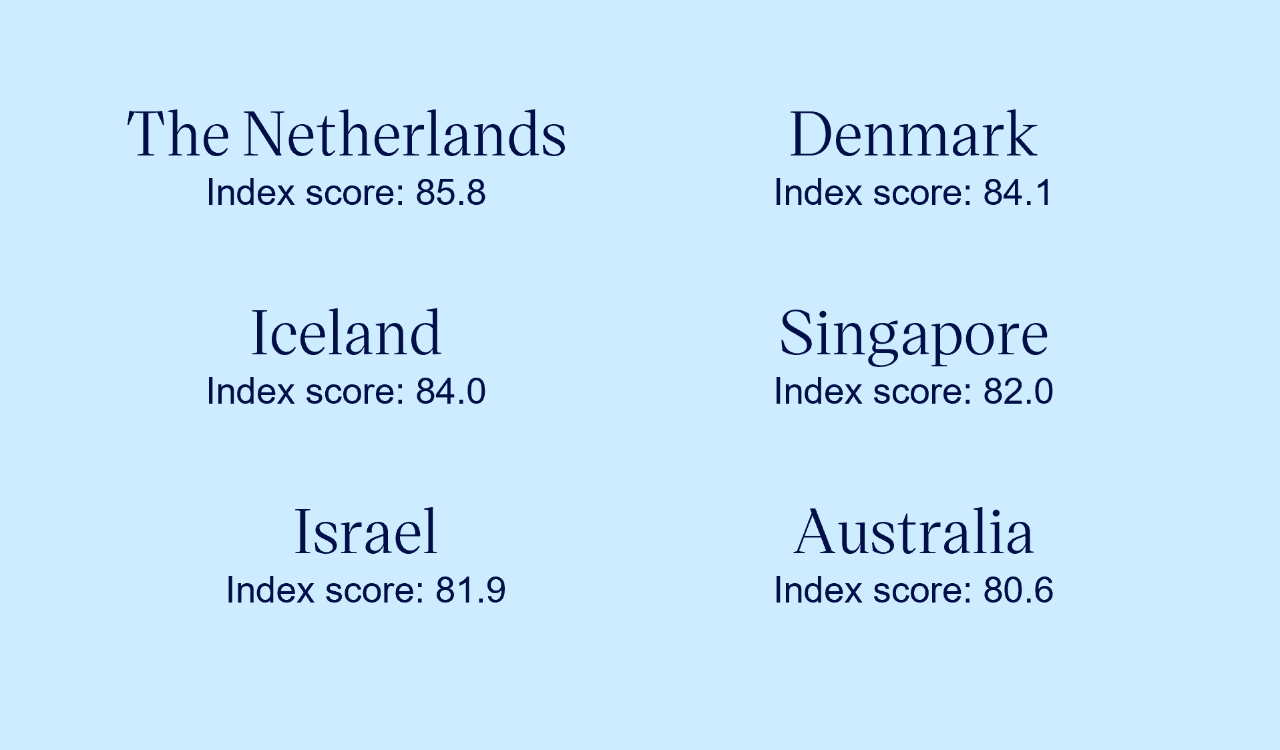 MCGPI A Grades
- China C+ (60.6 ▲)
- Hong Kong SAR B (71.2 ▲)
- India D (46.8 ▲)
- Indonesia C (50.7 ▼)
- Japan C (58.0 ▲)
- Korea (South) C (56.4 ▲)
- Malaysia C+ (61.1 ▲)
- Philippines D (49.2 ▲)
- Singapore A (82.0 ▲)
- Taiwan C (59.7 ▲)
- Thailand C (52.2 ▲)
- Vietnam C (54.6 ▲)

A brief review of each system
The impact of ageing populations on pension systems
Many nations are facing an ageing population due to falling birth rates and increasing life expectancies. According to the World Economic Forum (WEF)'s Longevity Dividend report, co-authored with Marsh, the global over-65 population will grow by 53%. In Asia, almost two thirds of the working population are caregivers and many of them worry about affordable childcare and eldercare services, with a knock-on effect on their own wellbeing. Japan, Hong Kong and Singapore are examples of such super-aged societies in the region. These demographic changes have profound long-term implications for pension systems:
- Potentially increased costs of pension provision as individuals live longer,
- Funding pressures as working age populations proportionately decrease,
- The need for more flexible pension designs to accommodate phased retirement and non-traditional employment,
- Intergenerational tensions as adequacy and sustainability of systems are reviewed,
- Shifts in pension fund investment strategies as a greater proportion of the US$70 trillion in global pension fund assets moves toward defensive positioning.
Weakened financial security can trigger a domino effect, as individuals’ ability to manage their health, work, and wealth spans is interconnected and mutually reinforcing. As reflected in the Marsh and WEF Longevity Dividend report, poor financial resilience can undermine mental and physical well-being and, in turn, reduce people’s ability to work. In Asia Pacific, the aging population represents a $10.2 trillion growth opportunity, and how it is harnessed will determine whether longevity becomes a drag on growth or an economic catalyst. Policymakers who recognise these demographic consequences have a window of opportunity to implement evidence-based policy responses, which we detail in our report.
The central insight is straightforward: demography is our destiny, but policy responses are choices. While demographic changes are inevitable, the path forward is not predetermined. Those systems that consider and address the demographic consequences today will be much better positioned to develop sustainable retirement income policies that provide adequate and equitable retirement security for generations to come. The evidence shows that with clear objectives, thoughtful funding, and flexible design, leading pension systems can and will remain resilient.
Whilst good policies create the structure for a resilient pension system, employers have an important role to play in adapting to policy changes and market trends, with the objective of enhancing the wellbeing of their employees before and after retirement. For example, in Asia:
-
Employers in Korea will be required to offer retirement plans from 2027, covering at least the statutory severance pay. This is a good opportunity for employers to better understand employees’ retirement needs and to design solutions which are sustainable and valued by employees.
-
Whilst there is an improvement in the integrity of Philippines' pension system, certain weaknesses persist. Individual retirement planning becomes crucial and many employers are now recognizing the importance of retirement benefits in attracting/retaining the best talent.
-
In Hong Kong, given the rising cost pressure and the increased sophistication of the retirement landscape, it is ever more important for employers to review their existing retirement solution to ensure market competitiveness and cost effectiveness.
Retirement systems differ across markets, but all face the same long-term challenge: Delivering reliable income as demographics shift and markets change.
Managing Director, CFA Institute Research and Policy Center

See also: Supplementary report
Meet our lead author and contributors
Before accessing this website you must read and accept the following terms and legal notices.
You are about to enter a website intended for sophisticated institutional investors based in Hong Kong and the information contained herein is only intended for investors who are Institutional or Corporate Professional Investors as defined in the Securities and Futures Ordinance, Cap 571 Laws of Hong Kong and the Securities and Futures (Professional Investors) Rules. Any person unable to accept these terms and conditions should not proceed any further.
In Hong Kong, Mercers Outsourced Chief Investment Officer, Delegated Solutions and other Investment Services delivered through Mercer Funds are delivered by Mercer Investments (HK) Limited (“MIHK”). MIHK is authorized by the Securities and Futures Commission to undertake Type-1 (dealing in securities), Type-4 (advising on securities) and Type-9 (asset management) regulated activities in Hong Kong subject to the limitations set forth at https://apps.sfc.hk/publicregWeb/corp/ALR969/details. MIHK is registered with the Mandatory Provident Fund Schemes Authority as a principal intermediary. MIHK is registered in Korea with the Financial Services Commission as a Cross-Border Discretionary Investment Management business and as a Cross-Border Investment Advisory business.
Information about Mercer strategies and solutions is provided for informational purposes only and does not constitute, and should not be construed as, an offer to sell, or a solicitation of an offer to buy, any securities, or an offer, invitation or solicitation of any specific products or the investment management services of Mercer, or an offer or invitation to enter into any portfolio management mandate with Mercer. None of the content on Mercer.Com should be considered as advice. No actions should be taken based on this content without first obtaining professional advice. Mercer makes no representation, and it should not be assumed, that past investment performance is an indication of future results. Moreover, wherever there is the potential for profit there is also the possibility of loss. Past performance does not guarantee future results. The value of investments can go down as well as up, so you could get back less than you invest.
Mercer reserves the right to suspend or withdraw access to any page(s) included on this Website without notice at any time and accepts no liability if, for any reason, these pages are unavailable at any time or for any period. The solutions, products and services described in these pages are not available in all jurisdictions.