
Aging workforce solutions: Adapting rewards for changing needs

Transforming traditional, age-based systems into flexible frameworks is crucial to unlock organizational success. As Asia’s demographic realities evolve, it is crucial to re-evaluate your strategic talent priorities. We share four essential strategies to help you shape your employee benefits and rewards to stay relevant amidst Asia’s changing workforce demographics.
Asia-Pacific’s ageing population poses challenges to the future labour market
Asia's major economies are facing significant demographic changes, with rapidly ageing populations creating new workforce challenges. By 2060, Asia will have 60% of the world’s population aged 65 and older, and along with the Pacific region, projected to surpass one billion by 2050. Notably, the demographic aged 80 years or older is expected to comprise about one-fifth of all older persons in the same period1.
This shift is particularly pronounced in South Korea and Japan, where over one in three people will be over 65 years old by 2050. South Korea’s working-age population is projected to decline by 4.7%, while Japan’s age-old dependency ratio is expected to increase to 55% from 2018 to 2025. In contrast, emerging markets such as India are estimated to have an average median age of less than 30 years2, with over 60% of the population projected to be below the working age of 60 years by 2031.3
Amid these changes, the region’s rapid digitalization and adoption of technologies such as Generative AI, blockchain, and robotics continue to bring forth a duality of opportunities and challenges.4 In Southeast Asia alone, 42% of companies have reported exploring AI to automate tasks within the HR function in 2025,5 leading to shifting talent demands across the labour market.
This demographic shift, combined with accelerating technological change, requires companies to fundamentally rethink their reward strategies to maintain competitiveness and ensure sustainable talent pipelines.
How an aging workforce can drive up costs
The intersection of aging populations and digital transformation creates two primary pressures that demand immediate strategic response:
- Shrinking talent pipeline: With fewer young professionals entering the workforce—as evidenced by China’s population decline in 2022 and a projected reduction of 3 million young workers between 2023 and 2025—competition for early-career talent is intensifying. This labor shortage is driving up compensation costs, making traditional recruitment methods increasingly unsustainable.
- Growing skills gaps: Rapid technological advancements are widening skills gaps across all age groups. The demand for skilled jobs in APAC, particularly in sectors like communications, finance, and professional services, is outpacing the supply of young job seekers. Moreover, experienced workers require ongoing upskilling to stay relevant. This situation further escalates costs, as companies must invest in training and development to bridge these gaps.
How can companies adapt their employee rewards strategies to address these challenges to build a sustainable talent pool?
4 essential employee rewards strategies to address Asia’s aging workforce
Rather than deploying a one-size-fits-all approach, companies need a multi-track lens that recognizes employees’ different life stages and career priorities.
The workforce now spans up to five generations, each with distinct needs and preferences. A senior engineer supporting both children and aging parents requires fundamentally different benefits than a young digital native focused on career development.
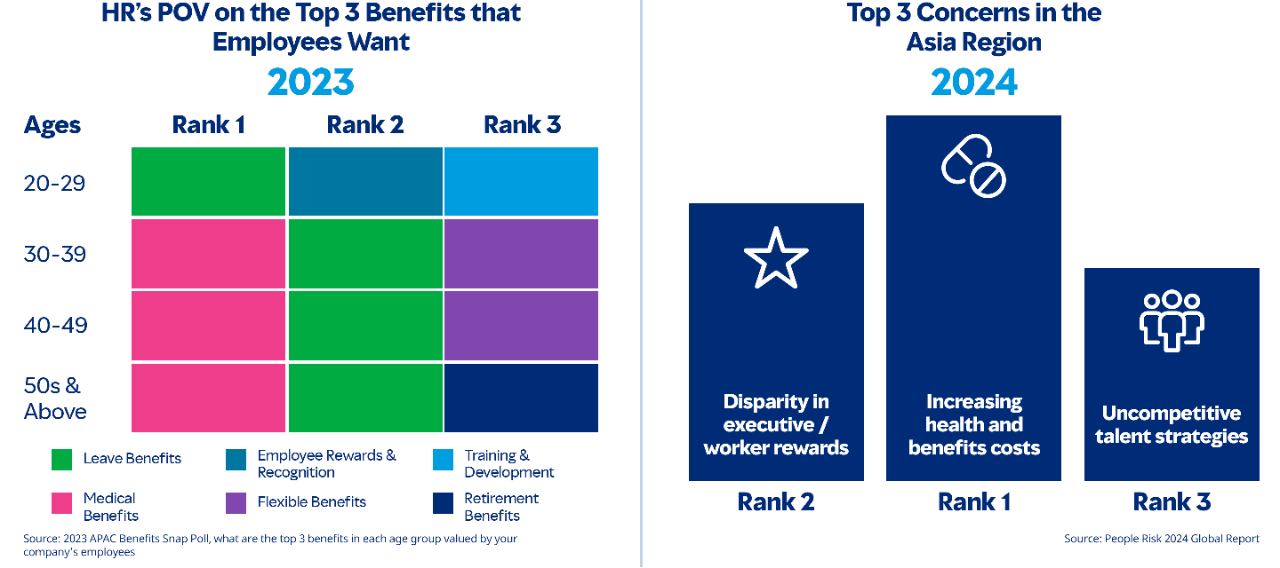
The image features a visual representation of the top three benefits and concerns that employees in the Asia region prioritize. The image is designed to highlight key insights from an HR perspective, showcasing the most significant factors that influence employee satisfaction and engagement.
The layout includes a ranked list, with the third rank prominently displayed, indicating the importance of these benefits and concerns to the workforce. The design utilizes clear typography and contrasting colors to enhance readability, ensuring that the information is accessible to all users, including those with visual impairments.
Overall, the image serves as an informative graphic that summarizes essential employee insights, contributing to a better understanding of workforce needs in the Asia region.
Flexible Benefits Platforms
Flexible benefits platforms allow organizations to maintain cost control while addressing diverse needs through the provision of multiple benefits tracks aligned with life stages. With a rising prevalence of this offering in APAC, customizable health and wellness programs that cater to age-specific health priorities, such as family and elder care support options, are key to meeting the needs of the sandwich generation.
Employees also enjoy more flexibility in choosing between immediate benefits and long-term savings, allowing them to accommodate different financial priorities.
Critical Skills Premium
Rising skills scarcity is impacting the effectiveness of traditional market-based compensation. Organizations in APAC need dynamic approaches, which may include premiums for high-demand technical skills, to ensure the retention of critical capabilities. Against the backdrop of demographic change, booming digital and start-up innovations, the region is poised for significant employment shifts.
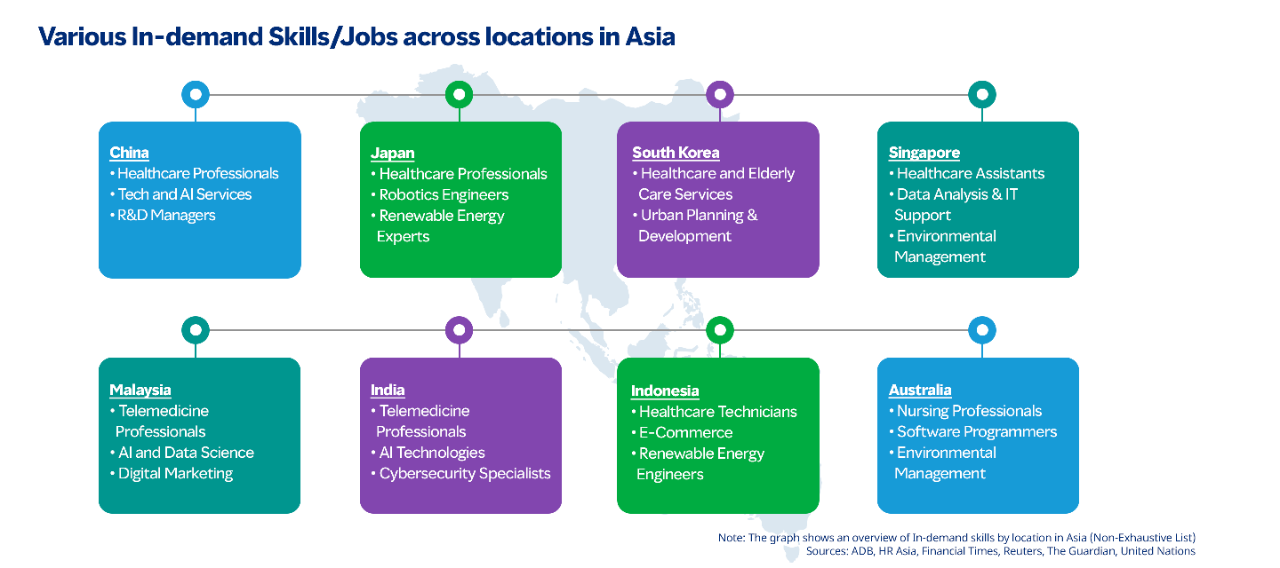
With mature markets such as China, Japan, and Singapore experiencing rapid population ageing, fields such as technology, healthcare, and renewable energy are amongst the top industries seeking certain skilled professionals, resulting in a need for older workers to rapidly upskill to keep up with the changing labour market.
On the other hand, for emerging markets such as Malaysia, India, and Indonesia, the youth employment landscape is moving towards digital-first adoption of healthcare and telemedicine, energy system design, and roles with sustainability expertise. Younger talent pools, such as Gen Z, are more likely to consider jobs that align with their values.6 These shifts may reflect a desire for innovative roles across these markets.
Notably, non-technical skills,7 such as strong leadership and management capabilities, are essential for organizational success and command higher salaries.
Effective communication and collaboration across teams are increasingly valued, resulting in enhanced compensation for those who excel. Furthermore, adaptability and a commitment to continuous professional development are highly regarded in an evolving job market, leading to competitive salaries for candidates who can quickly acquire new skills.
Following this, organizations should implement regular skills assessments and compensation reviews to ensure market competitiveness, establish clear progression pathways based on skill acquisition to promote continuous learning, and provide learning and development allowances aligned with strategic capabilities.
Career-Stage Appropriate Incentives
Organizations must offer compelling value propositions to attract top graduates in a shrinking young talent pool. This includes competitive base pay with accelerated review cycles, clear career development pathways to demonstrate long-term opportunities, and international exposure opportunities to compete with global employers.
Additionally, providing education and certification support to build critical skills and incentives for mentorship program participation can significantly accelerate development.
As technical skills become scarcer, retaining experienced specialists is critical. Companies should implement technical skill premiums to recognize market value, along with project leadership bonuses to encourage the application of capabilities.
Innovative incentives can help maintain technical currency, while external partnership opportunities help broaden experience. Furthermore, advanced certification deepens expertise, ensuring specialists remain engaged and valuable.
To keep experienced workers engaged and productive, new approaches are necessary. Knowledge transfer incentives can help maintain institutional expertise, while flexible work arrangements extend working lives. Phased retirement options can effectively manage succession, and advisory role compensation structures retain critical knowledge. Legacy project leadership premiums can leverage the experience of seasoned professionals, ensuring their contributions continue to benefit the organization.
Overall, the deployment of project-based bonus structures that reward contributions regardless of age or tenure can breathe life and refresh the traditional linear progression models used by organizations.
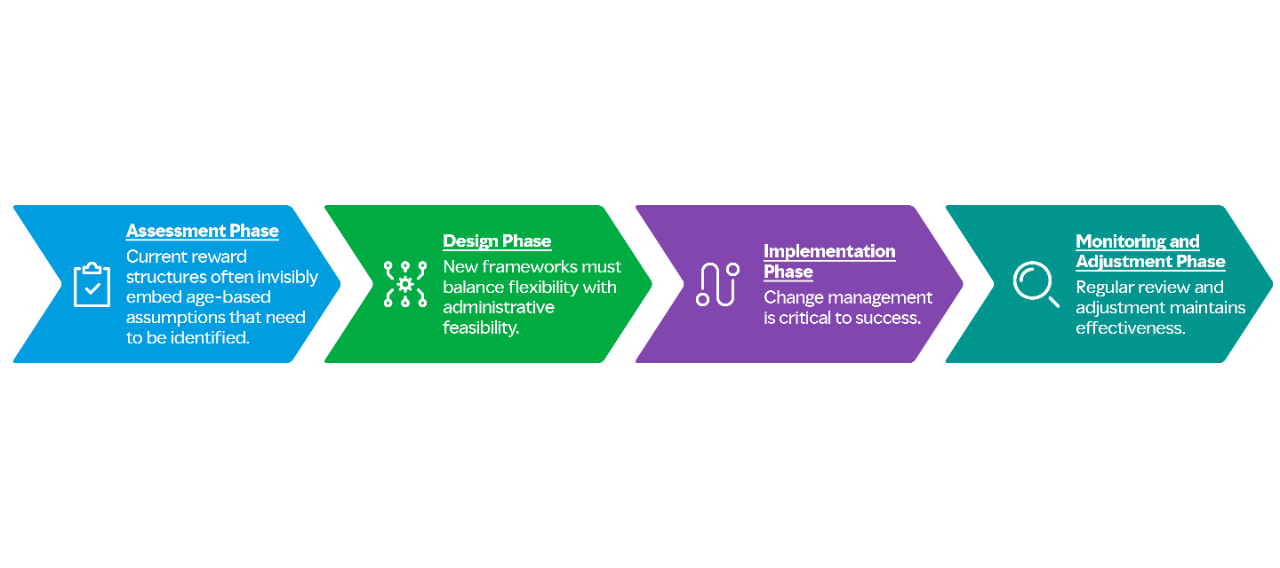
Assessment Phase: Current reward structures often invisibly embed age-based assumptions that need to be identified.
Design Phase: New frameworks must balance flexibility with administrative feasibility.
Implementation Phase: Change management is critical to success.
Monitoring and Adjustment Phase: Regular review and adjustment materials effectiveness.
Looking Ahead
Aligning your employee rewards to an aging workforce is a strategic necessity
Success requires ongoing monitoring of demographic trends, regular strategy adjustment, and a commitment to creating inclusive workplaces that value and reward contribution regardless of age.
At Mercer Asia, we have partnered with organisations across the region to transform rigid age-based systems into adaptable frameworks. Leveraging our extensive experience and data-driven insights, we empower companies to effectively navigate the challenges and seize the opportunities presented by an aging workforce.